






• Agra Metro saved ₹5 million (USD$58,000) in annual electricity costs by implementing Sécheron’s IGBT inverter for regenerative energy recovery, the first installation of its kind in India.
• By converting braking energy into reusable power, the metro significantly improved energy efficiency, reduced its carbon footprint, and achieved a payback period of less than five years.
USD$58,000
annual energy savings generated by a single regenerative braking unit
< 5 Years
projected payback time to full amortization for the inverter-transformer system
30 Years
projected product lifetime enough for generating a total net return of USD$1.4 million
When the Agra Metro Rail Project began operations in March 2024, it marked a major milestone for sustainable urban transportation in India. Designed to serve millions of passengers and reduce the city’s environmental impact, the metro system was built with a strong focus on energy efficiency from the start. To achieve this, Agra Metro implemented Sécheron’s IGBT inverter for regenerative energy recovery, becoming the first metro in India to deploy this advanced technology.
Electric metro trains generate energy every time they brake. In conventional systems, this energy is dissipated as heat. Sécheron’s IGBT inverter system changes this by capturing the braking energy and feeding it back into the electrical grid, where it can be reused by other trains or supplied to the wider power network. This significantly improves overall energy efficiency and reduces electricity consumption.
The results were both immediate and measurable. Within just one year, a single inverter helped Agra Metro save approximately ₹5 million (USD$ 58,000) in electricity costs. These savings demonstrate the financial value of regenerative braking technology while also supporting long-term operational efficiency. With a payback period of less than five years and a projected lifespan of more than 30 years, the solution is expected to deliver substantial cost savings (USD$ 1.4 million) over time.
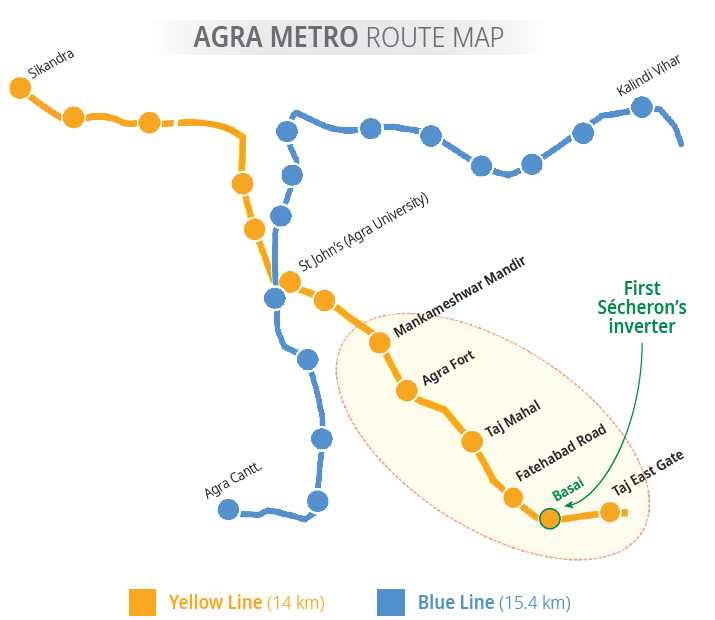
Beyond the financial benefits, the regenerative energy recovery system is helping Agra Metro reduce its carbon footprint and operate more sustainably. By reusing energy that would otherwise be lost, the metro is lowering its overall power demand and improving the efficiency of its traction power infrastructure.
Agra Metro’s success highlights the growing importance of energy recovery solutions in modern rail systems. As cities expand their public transportation networks, regenerative braking technology is becoming a key enabler of sustainable, cost-efficient metro operations. By turning braking energy into usable power, Agra Metro is setting a strong example for other metro projects across India and around the world.


